

Wed 4 November 2026
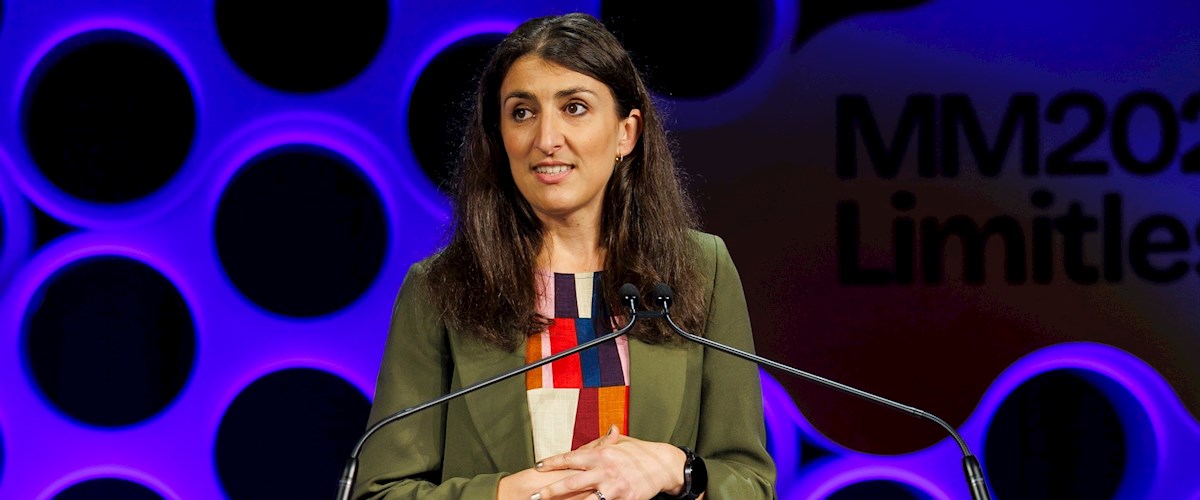
MM2026 Medal of Merit Oration
Thank you. What an honour it is to receive an award in my personal capacity for work as a clinical trials hospital pharmacist.
When I was thinking about what I would say today, my first and only thought was about how someone becomes a clinical trials pharmacist.
When people ask me how I became a clinical trials pharmacist, I honestly don't know if I have a good answer.
Because the truth is, I never set out to become one.
Some people have an epiphany and grow up knowing what they want to be. I only had strong feelings about what I didn’t want to be. A doctor deals with needles which I baulk at, so that was out, and while my parents were convinced I’d be a lawyer, I struggled with the idea of ethical conundrums between myself and potential clients.
Looking back, my career has been shaped largely by one thing.
A feeling.
A quiet little voice that would appear every now and then and ask:
"What if?"
As a child I liked experimenting. At one point I was convinced I could make eucalyptus oil by soaking leaves in water. It obviously didn't work, but it did spark a curiosity about science that eventually led me to study medicinal chemistry.
During my studies, I held a casual job in community pharmacy which made me realise I also enjoyed helping people. Pharmacy seemed like the perfect combination of science and helping people, so I followed that feeling.
During my pharmacy studies, that little voice appeared again during a hospital placement.
So I pivoted from the idea of community pharmacy, applied for intern roles and moved to Sydney to begin my hospital pharmacy career.
I loved the wards. I loved finding medication errors and covering charts in green pen. I was convinced aged care pharmacy would be my future.
Then one day, the clinical trials pharmacist went on leave, and they asked for volunteers to fill the role. It was a secondment, so I put my hand up.
That single decision changed my career trajectory.
At the time, I didn't know anything about being a clinical trials pharmacist.
What I did know was how to organise things.
During a monitoring visit, a sponsor asked me how I'd managed to find a drug return that had apparently been missing for two years.
I told her the truth. I just reorganised the shelves.
Perhaps my organisational skills might be useful in ways I hadn't expected.
Very soon after that, an opportunity came up at Royal Prince Alfred Hospital.
That feeling hit again. What if this was my chance to contribute to research without being stuck in a laboratory?
The role combined everything I loved: research, science, innovation and pharmacy.
On paper, I hadn’t even been a pharmacist long enough to qualify for regrading, but I must have shown potential as I was the successful applicant in the role.
On my first day there were boxes everywhere, no definitive list of trials, and processes that existed only in people's heads. So I did what I knew best and organised things: I completed a stocktake, created a database and started implementing SOPs.
Over time the service grew from around 120 to more than 350 trials. I was professionally thriving.
But it was not without its challenges.
Clinical trials pharmacists are some of the most resilient people I know and it can be a surprisingly lonely job. You're often the only person in the room who understands the full picture, working between clinicians, researchers, sponsors, regulators and colleagues within your own departments. The resources you know are needed for the job are often overlooked and well outside of your control. Success is largely invisible, the work is complex, and the outcomes may not emerge for years.
But that's also what makes it so rewarding. Every protocol is different. Every day is different. Some days you feel like a pharmacist, other days a project manager, lawyer, and accountant. No matter how many SOPs you write, new challenges appear constantly.
After more than a decade in the role, that feeling started to creep in again
But this time it was a bit different. It was the feeling that perhaps I had become too comfortable.
I had built something I was incredibly proud of.
In fact, I often dreamt about work. Looking back, that was probably burnout trying to disguise itself as dedication.
I decided to get some career coaching. During this time I received one piece of advice that changed my thinking: stop focusing on your weaknesses and start leveraging your strengths.
For the first time, I understood why I naturally gravitated towards work that required strong execution and relationship-building: creating systems, bringing people together and solving complex problems.
That advice also prompted me to reflect on my own journey into clinical trials pharmacy and what had made it so challenging.
When I stepped into the role, there was no roadmap. No formal training pathway. Like many clinical trials pharmacists, I learnt through trial and error, making mistakes and relying on the generosity of colleagues who answered my phone calls. I asked a lot of questions, to the point one colleague suggested I be capped at asking 5 per day.
Over time, I realised much of the knowledge in our specialty existed only in people's heads, and every time someone left a role, some of that knowledge left with them.
And that's when those strengths suddenly seemed useful in a different way.
Instead of building systems for a single department, what if I could help build a system for the profession?
The more I thought about it, the more I felt we owed future clinical trials pharmacists something better.
So when the opportunity came up to create the resource I wish I'd had when I started, I jumped.
The Clinical Trials Residency Program became an opportunity to take more than a decade of experience and turn it into something that could support the next generation of pharmacists entering our specialty.
It wasn't about teaching people how to follow processes. It was about recognising clinical trials pharmacy as a specialised area of practice that deserves structured training, mentorship and professional development.
While my name might be attached to the program, it was truly a collaborative effort. Colleagues from around Australia shared their expertise, reviewed drafts and challenged my thinking. The final program reflects the collective knowledge of a group of specialised professionals rather than the experience of one individual.
And if it means that the next pharmacist who walks into a clinical trials role feels a little less overwhelmed, a little less isolated and a little more supported than I did, then I think it's achieved exactly what it was designed to do.
Interestingly, while I was busy trying to capture everything I'd learnt and pour it onto paper, another "what if?" opportunity appeared.
A rare opportunity for a Sydney based role at the TGA came up, but the catch was, it wasn’t in the clinical trials space.
While I was very familiar with state-based law, I knew there was a huge gap in my understanding of the broader regulatory framework. It also presented an opportunity to move beyond ‘site’ level knowledge and take my pharmacy skills into a regulatory role that didn’t involve me moving interstate.
So I took another leap.
Starting again and reinventing yourself is hard.
I’d spent years building my expertise, and suddenly finding myself a beginner again felt like an identity crisis.
In hindsight, that's often what growth feels like. It’s uncomfortable.
But all was not lost and work within the clinical trials space found me again, in the shape of moving to a clinical trials reform team. This wouldn’t have happened if I hadn’t taken the leap into the regulatory role as suddenly, the different skills and experiences I had picked up outside of trials became relevant.
Before I finish with some closing thoughts, there are some people I need to thank.
Firstly, my husband, my children, and my parents. Thank you for the sacrifices you have made so I could continue pursuing opportunities that excited me.
To all of my pharmacy colleagues who supported me on the ground or who answered the phone and reminded me that we were all facing the same challenges, you have been my clinical trials village. None of us gets anywhere alone.
So if there's one message I'd like to leave you with today, it's this:
When I look back over my career, almost none of the defining moments were planned.
I didn't plan to become a pharmacist
I didn't plan to become a clinical trials pharmacist and run a clinical trials pharmacy service.
I didn't plan to move into a regulatory role.
And I certainly didn't plan to be standing here accepting an award for professional recognition today.
Most of those opportunities didn't even exist to me when I started.
I couldn't see them because I didn’t know they were there.
That's why the theme of this conference, Limitless, resonates so strongly with me.
Because pharmacy really is limitless.
Not because every path is easy or every opportunity will be right for you, but because there are far more opportunities available than we can see from where we're currently standing.
Some of the biggest opportunities in my career came from taking a step into something unfamiliar, into roles I knew nothing about. Every move felt uncomfortable but looking back, every one of them was a doorway to leading to something else.
My advice is simple.
Be curious, ask questions, and try hard things.
Follow the opportunities that make you just a little bit nervous.
And every once and a while listen to that little voice that occasionally asks
"What if?"
Because that voice may be pointing you towards something bigger than you can currently imagine and sometimes that’s where the most extraordinary opportunities begin.